
See the vitals.
Keep it stable.
Compact monitors that use fewer wires on mice, rats and other small animals through surgery, electrophysiology and imaging: ECG, respiration, temperature, SpO2, blood pressure and exhaled CO2, and gating that locks your imaging to the cardiac and respiratory cycle.
Easy monitoring, small footprint
Physiological monitoring keeps the animal safe and the data trustworthy, on its own or alongside another measurement. These instruments are built to add parameters without adding wires. They're bench monitors for an anaesthetized, restrained or head-fixed animal during a procedure, not implantable telemetry for tracking a freely-moving animal over hours or days.
Up to seven parameters
ECG, respiration, heart and breath rate, core temperature with active warming, blood pressure, SpO2 and exhaled CO2, measured together on one system.
Fewer wires on the animal
A single data and power cable feeds the communication module on the Small Animal Monitoring System, and the SpO2 monitor is battery-powered and runs wireless to a tablet. Nothing extra tethers the animal during anaesthesia.
Physiology out to your rig
Analog outputs, BNC gating pulses and export to a computer put the traces where you need them, alongside your imaging data, or triggering the acquisition itself.
Which system do you need?
Every parameter listed here is taken from the instrument's own specification. Find the row that matters to your protocol and compare the four instruments.
| Parameter |  Small Animal Small AnimalMonitoring System | 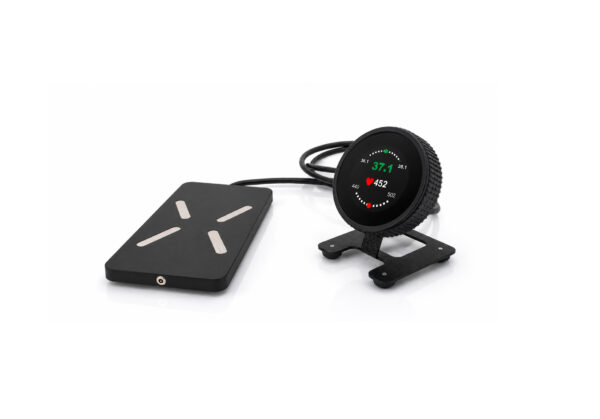 Mouse Physiological Mouse PhysiologicalMonitor | 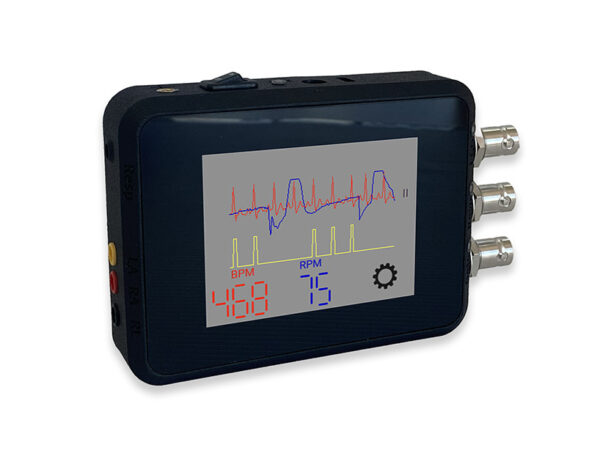 ECG & Respiration ECG & RespirationGating System | 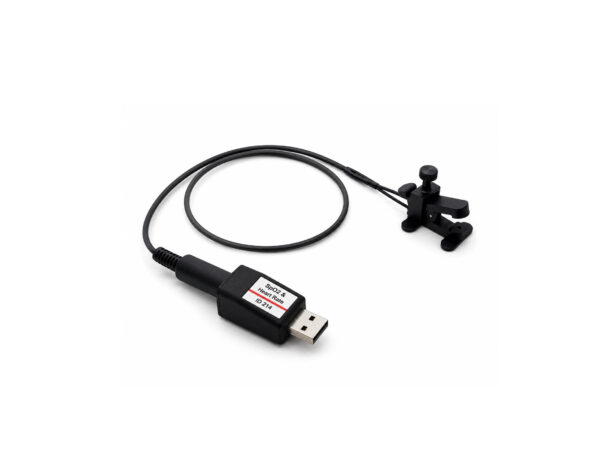 SpO2 & Heart SpO2 & HeartRate Monitor |
|---|---|---|---|---|
| ECG | ✓ | ✓ | ✓ | – |
| Respiration | ✓ | ✓ | ✓ | – |
| Heart rate | ✓ | ✓ | ✓ | ✓ |
| Breath rate | ✓ | ✓ | ✓ | – |
| Core temperature | ✓ | ✓ | – | – |
| Active warming | ✓ | ✓ | – | – |
| SpO2 | ✓ | – | – | ✓ |
| Blood pressure | ✓ | – | – | – |
| Exhaled CO2 | ✓ | – | – | – |
| Imaging gating output | ✓ | – | ✓ | – |
| Stereotaxic frame option | ✓ | – | – | – |
| Restrained, non-anesthetized use | – | – | ✓* | – |
| Species | Mice, neonatal rats, adult rats, guinea pigs, marmosets | Mice | Mice, rats, guinea pigs, marmosets, rabbits, cats | Mice, rats, guinea pigs, marmosets |
| Price | Via Harvard Apparatus Buy now | USD $4,000 Buy now | USD $1,800 Buy now | USD $1,000 Buy now |
*Restraining the animal for non-anesthetized use requires a harness, and readings are sensitive to motion artifacts.
Not sure which row matters most for your protocol? Tell us about your experiment and we'll recommend a configuration.
The instruments
Four instruments, each built around a different combination of parameters and species.
Small Animal Monitoring System
The full picture in one integrated solution. A single data and power cable feeds a communication module with four analog outputs, so you get seven physiological parameters without a bundle of wires around the animal. Integrated paw electrodes work in both prone and supine positions, alongside external needle electrodes.
Mouse Physiological Monitor
Real-time ECG, respiration and core body temperature for preclinical mouse work, without the cost or complexity of a high-end system. Integrated paw electrodes give clean ECG in both prone and supine positions, with no complex setup, and closed-loop heating is driven from either surface or rectal temperature.
ECG & Respiration Gating System
Motion is the limit on quantification in fast imaging. The GS4010 gates acquisition on the QRS complex and on the quiet phase of respiration, so ultrasound or optical frames land at the same point in every cycle. Handheld, 3.2-inch touch screen, three BNC outputs.
SpO2 & Heart Rate Monitor
Non-invasive oxygen saturation and heart rate from a paw or tail sensor. One compact wireless tool, battery-powered through a USB cable to a power bank, and Bluetooth to an Android tablet. Nothing else tethers the animal during anaesthesia. Pinch-to-zoom on waveforms works through surgical gloves.
On their own, or built into your existing setup
These instruments keep an animal safe and its physiology on record under anaesthesia or during any procedure, on their own. They're also designed to drop into the rigs LabeoTech already builds, so physiology can be recorded on the same animal, in the same session, as your imaging or electrophysiology.
- Gate acquisition on the QRS complex and the quiet phase of respiration, so frames land at the same point in every cycle
- Record physiology in parallel with widefield and fluorescence imaging to separate genuine signal from systemic haemodynamics, or run standalone to track vitals during any procedure
- Analog and BNC outputs carry the traces and the gate pulse to the rest of the rig
- Ear and tooth bars, available as an add-on, stabilise the head for surgery, live electrophysiology or microscopy
Imaging & optogenetics
Gate on the cardiac and respiratory cycle, or record physiology alongside the imaging run.
Imaging & optogeneticsSensory stimulation, monitored
Deliver a timed air puff to the whisker pad or olfactory region and record the physiological response, on the same anaesthetized animal.
Air Puff Whisker & Olfactory StimulatorFits the rest of your setup
Physiology monitors are designed to sit alongside the acquisition and control tools already in your lab.
Building a custom rig? Contact us about integrating additional devices.
Frequently asked questions
Which system should I pick if I only need SpO2?
The SpO2 & Heart Rate Monitor. It measures oxygen saturation non-invasively from a paw or tail sensor over a 50–100% range, acquiring at 250 Hz in 24-bit on red and infrared channels, and streams to an Android tablet over Bluetooth at a typical range of 15–25 m. The Small Animal Monitoring System also measures SpO2, as part of its seven-parameter set.
How is blood pressure measured?
Through an external pressure transducer connected via an arterial catheter — an invasive measurement, available on the Small Animal Monitoring System. The other three instruments in this lineup don't include a blood pressure channel.
Which one can trigger my imaging system?
Two of the four. The ECG & Respiration Gating System (GS4010) is the dedicated handheld option: it gates on the QRS complex and on the quiet phase of respiration, and provides three BNC outputs (ECG, respiration and gate) with a 0–3.3 V pulse adjustable from 0.1 to 100 ms at 100 µs resolution. The Small Animal Monitoring System also provides a gating output alongside its other seven parameters.
How does the physiology data get out of the instrument?
It depends on the model. The Small Animal Monitoring System and the SpO2 & Heart Rate Monitor both pair with an Android tablet over Bluetooth, saving and exporting to CSV, MATLAB, Excel and LabChart. The Small Animal Monitoring System and the ECG & Respiration Gating System both provide BNC outputs. The ECG & Respiration Gating System and the Mouse Physiological Monitor both have an onboard display and a USB connection to computer software for saving and exporting data.
How do I order these instruments?
The Small Animal Monitoring System is sold through Harvard Apparatus. The other three are available directly from our online store, by credit card or purchase order. Contact us if you have questions about pricing or configuration.
Not sure which one fits your protocol?
Tell us the species, the procedure and the parameters you need to record. We'll tell you which instrument covers it, or whether you need more than one.