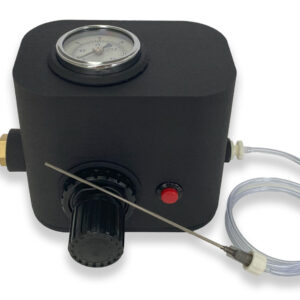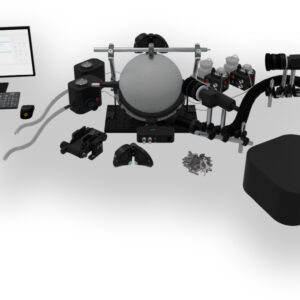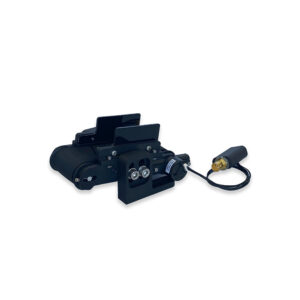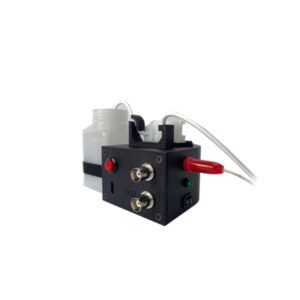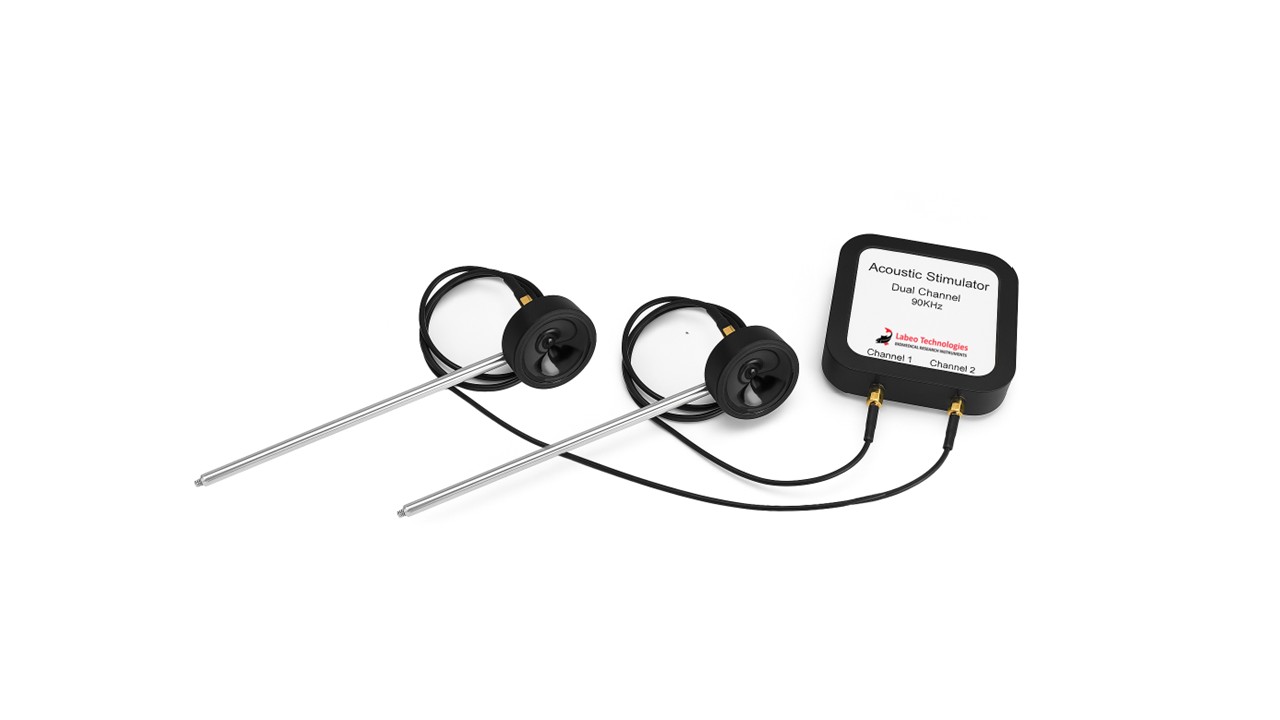
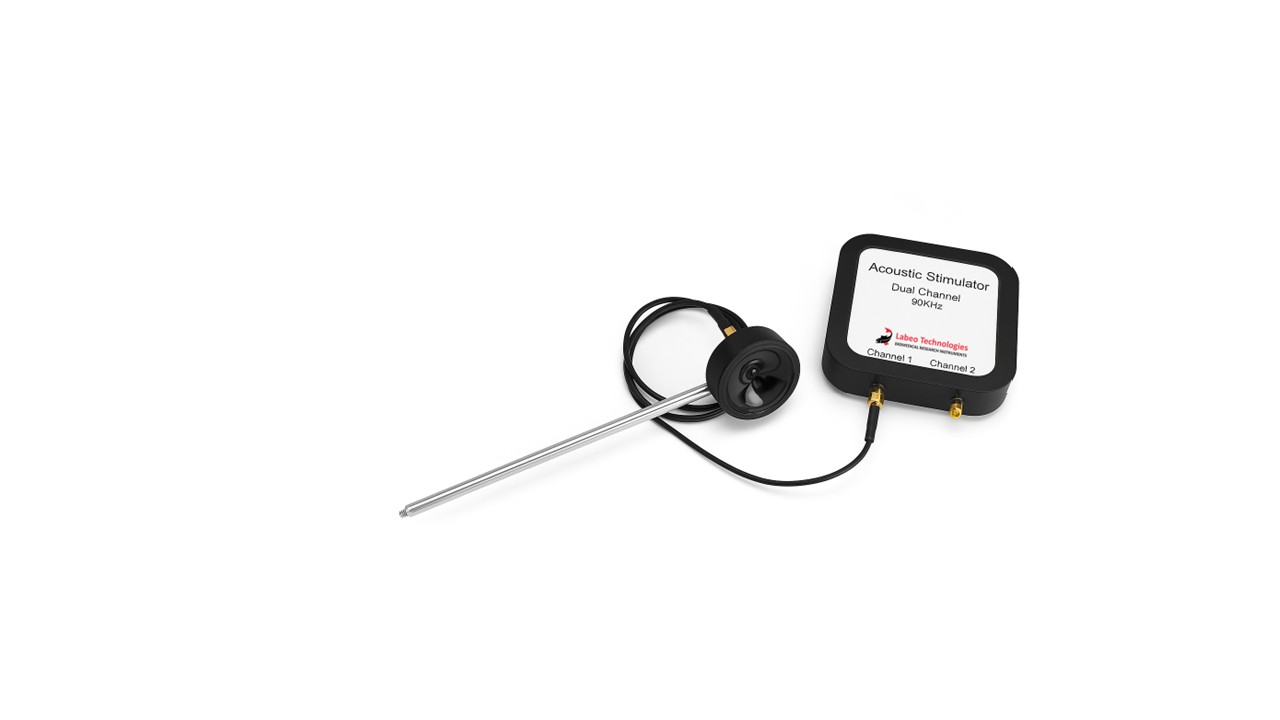
The High-Frequency Acoustic Stimulator is a compact and versatile system for delivering precisely controlled acoustic stimuli from the audible range up to 80 kHz, making it ideal for auditory neuroscience and behavioral research in rodents. The system provides two independent output channels (stereo) and connects to a computer as a standard USB audio device, allowing it to play virtually any audio source without requiring specialized drivers.
Simply connect the device via USB-C, play a sound from your computer, and the integrated amplifier drives the ultrasonic emitters. For experiments requiring precise timing, the system also includes configurable BNC Trigger Inputs and Outputs for hardware synchronization with external equipment.
Key Features
- Acoustic stimulation from the audible range up to 80 kHz
- Two independent output channels (stereo)
- Appears as a standard USB audio output device
- Integrated amplifier for direct connection to ultrasonic emitters
- Hardware trigger inputs and outputs for synchronization
- Compatible with custom audio files and generated tones
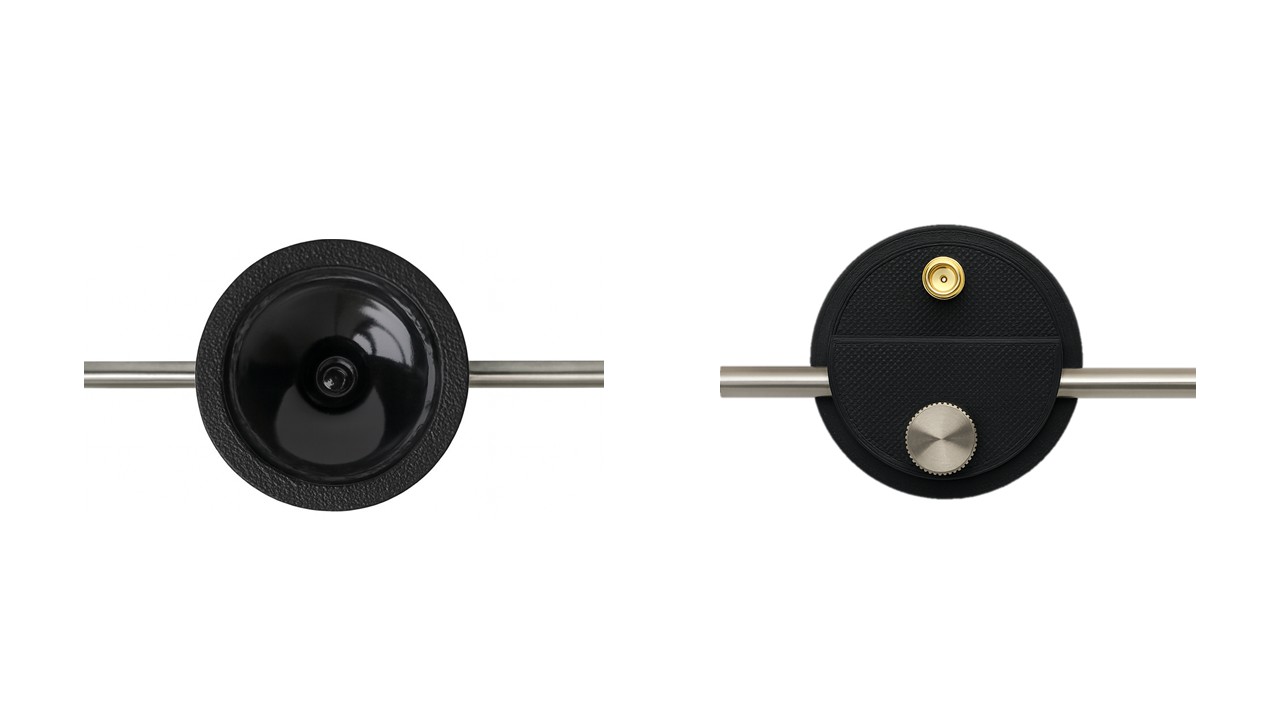
- Compact emitters with flexible mounting options
Key Specifications
| Specification | Value |
|---|---|
| Maximum frequency | 80 kHz |
| Sound level | 90 dB SPL at 40 kHz (measured at 25 cm) |
| Number of channels | 2 (stereo) |
| Emitter dimensions | Ø 47 mm × 29 mm |
| Mounting | 6.35 mm rod holder (compatible with the LabeoTech Magnetic Stand) |
| Connectivity | USB-C, BNC Trigger In, BNC Trigger Out |
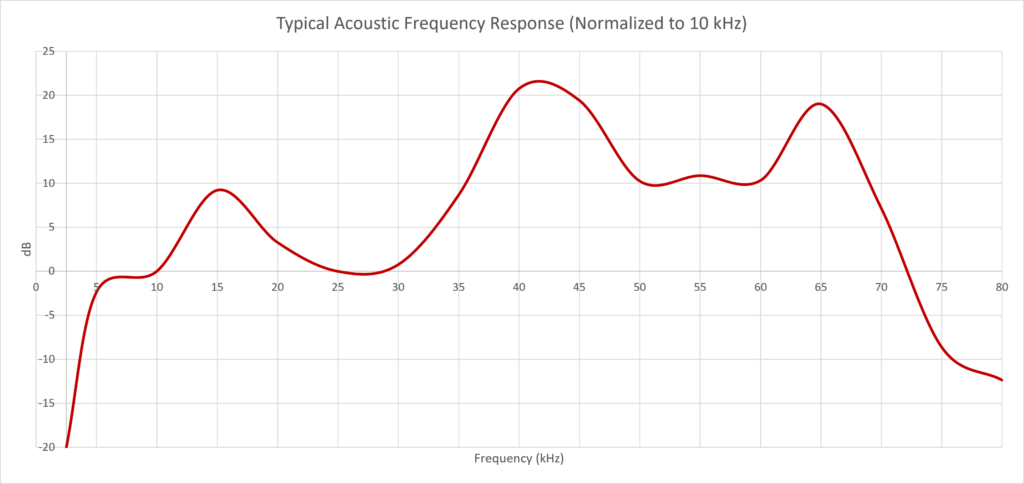
Frequency Response
The graph below illustrates the relative acoustic output across the operating frequency range.
Triggering and Synchronization
The system includes configurable BNC Trigger Inputs and Outputs for precise synchronization with external hardware.
Trigger inputs accept standard TTL signals to initiate playback with deterministic timing, making the device suitable for closed-loop experiments and synchronized behavioral or electrophysiological recordings.
The BNC connectors can also be configured as trigger outputs, allowing the stimulator to generate TTL events that synchronize cameras, imaging systems (such as our widefield imaging system), data acquisition hardware, or other laboratory equipment.
Control Software (Free & Optional)
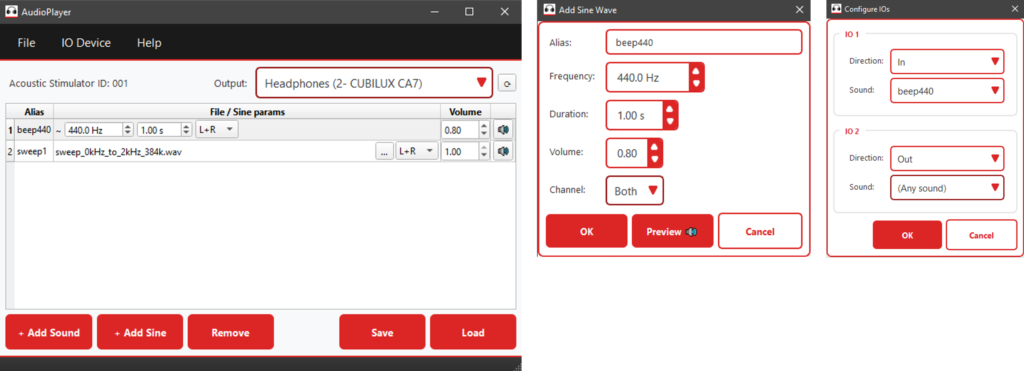
Our optional control software provides an intuitive interface for creating and delivering acoustic stimuli. Users can:
- Load standard .wav audio files
- Generate pure tones at arbitrary frequencies
- Trigger playback from hardware TTL inputs
- Configure trigger behavior and synchronization settings
Because the device functions as a standard USB audio interface, it can also be used with custom software such as MATLAB, Python, LabVIEW, PsychoPy, or any application capable of audio playback.
Compatibility
Seamlessly integrates with our Behavioral Rig, Virtual Reality Setup, and OiS200 Imaging System. Its hardware synchronization capabilities also allow straightforward integration with third-party acquisition and stimulation systems.
Applications
The system is well suited for a wide range of auditory neuroscience and behavioral experiments, including:
Tonotopic mapping to characterize neural responses across sound frequencies.
High-frequency auditory processing studies investigating neural encoding of ultrasonic sounds and mouse ultrasonic vocalizations.
- Ultrasonic vocalization (USV) playback, including support for recorded mouse vocalizations (such as MouseTube datasets) for behavioral and social communication studies.
- Closed-loop behavioral experiments, where playback is automatically triggered by animal behavior or external events using Maestro.
- Positive or negative reinforcement using precisely timed acoustic cues.
- Auditory conditioning, startle, and sensory discrimination paradigms.
Safety Notice
This device is capable of generating high-intensity acoustic signals, including ultrasonic frequencies that are inaudible to humans. Although these frequencies cannot be heard, excessive exposure at close range may present a risk to hearing. Avoid placing the emitters near the ears during operation and follow appropriate laboratory safety practices.