
Every Piece of the Behavioral Rig, Built to Work Together
Restrain, stimulate, reward and record: from head fixation and treadmills to whisker, visual and acoustic stimulators, decision devices, cameras and automated home cages. One catalog, one control layer, one synchronized dataset.
The configurator is an interactive builder for head-fixed rigs, starting at $1,500, checkout straight to cart or a quote.

Instruments Designed as One System
Buy a single device or the full rig: ours are built to be combined, mechanically, electrically and in software.
Mounts on Shared Hardware
Stimulators, reward systems and head fixation share the same breadboards and mounting standards, so a rig can be reconfigured instead of rebuilt.
Control Software Included
Each device ships with free control software, a PsychoPy plugin and a documented serial command list. Build protocols in Maestro, in the tool you already use, or drive them from your own code, and get a customized sample script included when you purchase multiple devices.
Synchronized with Your Imaging
TTL trigger inputs and outputs align stimuli, responses and rewards with widefield, speckle, intrinsic, 2-photon or electrophysiology acquisition, and with our VR setups.
Restraint & Locomotion
Choose head fixation or free movement, then the locomotion device that matches your task: belt, sphere, motorized treadmill, rotarod or maze, all on the same accessory ecosystem.
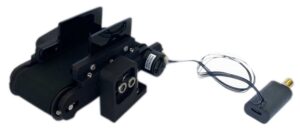
Low-Friction Rodent-Driven Belt Treadmill
Pre-assembled and tested, built under license from HHMI's Janelia Research Campus design. Head-fixed, with your hardware or ours, plus optional motorization for training; control software displays speed and distance and saves them to .csv.
Learn more
Mouse Head Fixation System
Ergonomic head restrainer with thumbscrew release in seconds and adjustable body height to reduce pressure on the spine and neck. Comes with a 40 mm acrylic tube, pre-mounted on a 150 × 150 mm breadboard with M6 taps, stable enough for 2-photon and OCT imaging.
Learn more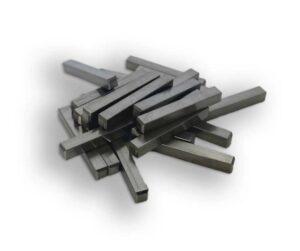
Titanium Headbars / Head Plates
Nearly twice as light as conventional stainless steel bars while keeping the same strength and stability: a durable option for long-term, secure head fixation, with a wide variety of shapes for various applications.
Learn more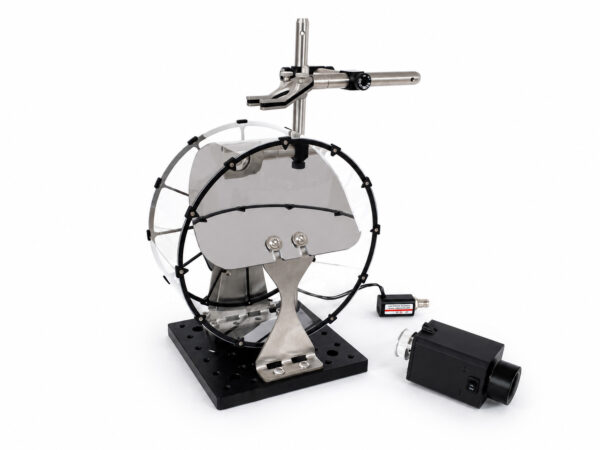
Low-Friction Running Wheel for Mice
Low rotational resistance for naturalistic voluntary running. An encoder reports rotation, distance, speed and activity, and the transparent wheel lets you track the paws from the side and from below, with optional motorized control, and head-fixed with your hardware or ours on the same breadboard as the rest of the rig.
Learn more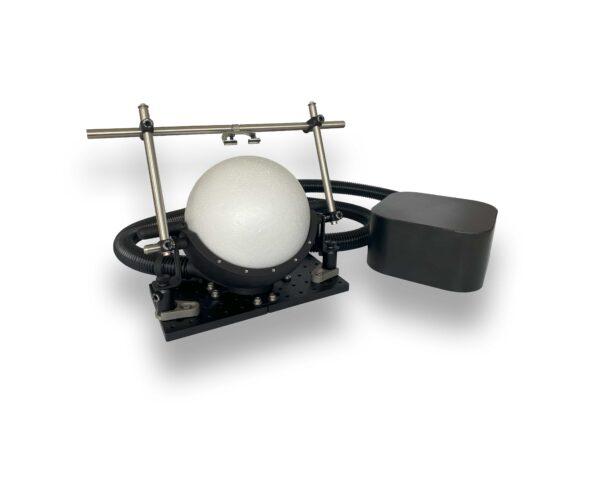
Spherical Treadmill for Mice
A lightweight, air-supported ball that lets head-fixed mice move freely while capturing accurate locomotion data in real time. A built-in brake restricts the ball to one-way running, and the same treadmill drives our VR environments.
Learn more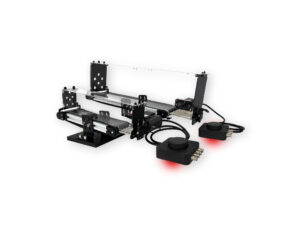
Rodent Treadmill
Compact benchtop treadmill for laboratory mice and rats. Drive it from the manual knob, or connect a computer to program full running sequences.
Learn more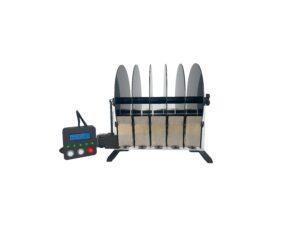
Rotarod
Flexible rotarod that accommodates a diverse range of designs, from asymmetric missing-step wheels to a simple plain rod. Runs from its own dedicated controller and software.
Learn more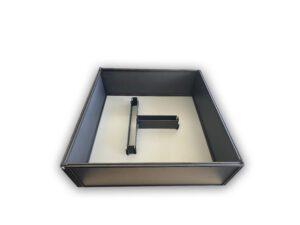
Magnetic Behavioral Maze
Reconfigure T-maze, Y-maze, plus-maze and open-field layouts in minutes on a single 120 × 120 cm ferro-magnetic surface. Custom configurations are available on request.
Learn moreWhich Locomotion Device?
Many ways to let an animal move, each suited to a different question.
| Device | Restraint | Drive | Control | Typical use |
|---|---|---|---|---|
| Low-friction belt treadmill | Head-fixed, with your hardware or ours | Animal-driven; motorization optional | Software, serial commands and physical I/O; PsychoPy-compatible | Voluntary locomotion and training under imaging |
| Low-friction running wheel | Head-fixed, with your hardware or ours | Animal-driven; motorization optional | Software, serial commands and physical I/O; PsychoPy-compatible | Paw imaging from below/the side for gait and locomotion quality |
| Spherical treadmill | Head-fixed, with your hardware or ours | Animal-driven, air-supported; one-way brake | Software, serial commands and physical I/O; PsychoPy-compatible | Two-dimensional navigation and VR paradigms |
| Rodent treadmill | Freely moving, or head fixation/harness optional | Motorized; PC-programmed sequences | Manual knob, software, serial commands and physical I/O | Forced running and exercise protocols, mice or rats |
| Rotarod | Freely moving | Motorized; PC-programmed sequences | Dedicated software, only needed to configure sequences and save data; optional while running | Motor coordination and balance assessment |
Not sure which fits your paradigm? Tell us about your experiment and we'll recommend a configuration.
Sensory Stimulation
Whisker, tactile, olfactory, visual and acoustic stimuli delivered on a trigger, with reproducible intensity, timing and waveform.
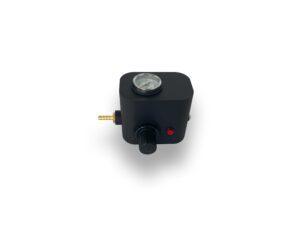
Air Puff Whisker & Olfactory Stimulator
Delivers controlled air puffs to the whiskers or olfactory region of mice, and of other rodents such as rats, with adjustable intensity and an input trigger for timing. Ships with control software and a serial command list.
Learn more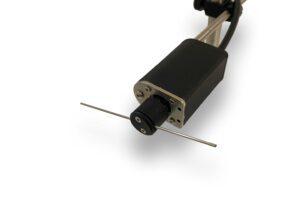
Mechanical Whisker Stimulator
A high-precision device for controlled whisker deflection in neuroscience and behavioral research, with reproducible parameters for accurate, reliable data. Controlled by serial commands or our free software.
Learn more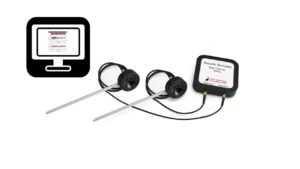
High-Frequency Acoustic Stimulator
Audible to ultrasonic stimuli up to 80 kHz, dual-channel. Hardware triggers sync it to a behavioral rig, VR setup or the OiS200, for tonotopy, ultrasonic vocalization, closed-loop playback and reinforcement tasks.
Learn more
Visual Uniform Stimulator (Ganzfeld)
Uniform full-field visual stimulation for retinal work. A dedicated ERG instrument, potentiometer-controlled and paired with the VFS200 Visual Flash Stimulator.
Learn more
ERG – Visual Flash Stimulator
Flash generator for electroretinogram (ERG) measurements. Short, high-power light pulses can be achieved with this unit, alone or paired with the Ganzfeld. Takes a TTL trigger for timing.
Learn more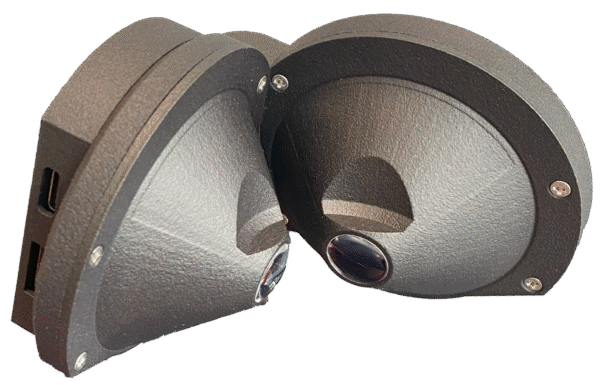
Visual Stimulation in VR
For closed-loop visual environments rather than discrete flashes, our VR headset and VRLab Suite turn the spherical treadmill into a navigable virtual world, with built-in Y-maze, predator, infinite corridor and retinotopy paradigms.
Explore VR systemsReward, Response & Decision Tasks
The devices the animal acts on: licks, lever presses, wheel turns or choices, measured by the same device that delivers reward or punishment.

Water Dispenser with Lickometer
Delivers plain or sweetened water to mice or rats on demand, with an input trigger for timing and adjustable volume. The lickometer counts licks and helps estimate how much the animal drinks. Software and serial commands included.
Learn more
Behavioral Lever
Built for fine motor tasks: it measures lever position and applies a programmable force that moves the lever out of the reward zone. Control it over TTL or serial, and pair it with the air puff stimulator and water dispenser for reward or punishment. Compatible with our treadmill, head fixation system and automated home cage.
Learn more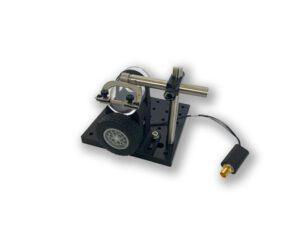
Behavioral Decision Wheel
Precise, reproducible assessment of decision-making in mice and other small animals. Inspired by the IBL and IBLRIG standard, it provides a standardized way to measure behavioral choices and adapts easily to different experimental setups.
Learn moreAversive Reinforcement
The Air Puff Whisker & Olfactory Stimulator doubles as the punishment side of a two-alternative task, triggered by the same logic that opens the water dispenser, with matched timing.
Learn moreControl, Recording & Analysis
The layer that runs the experiment and turns it into data: Maestro orchestrates the devices and logs the session, while high-speed IR video, .csv data and TTL alignment feed into VideoReviewer, DeepLabCut and your imaging pipeline.
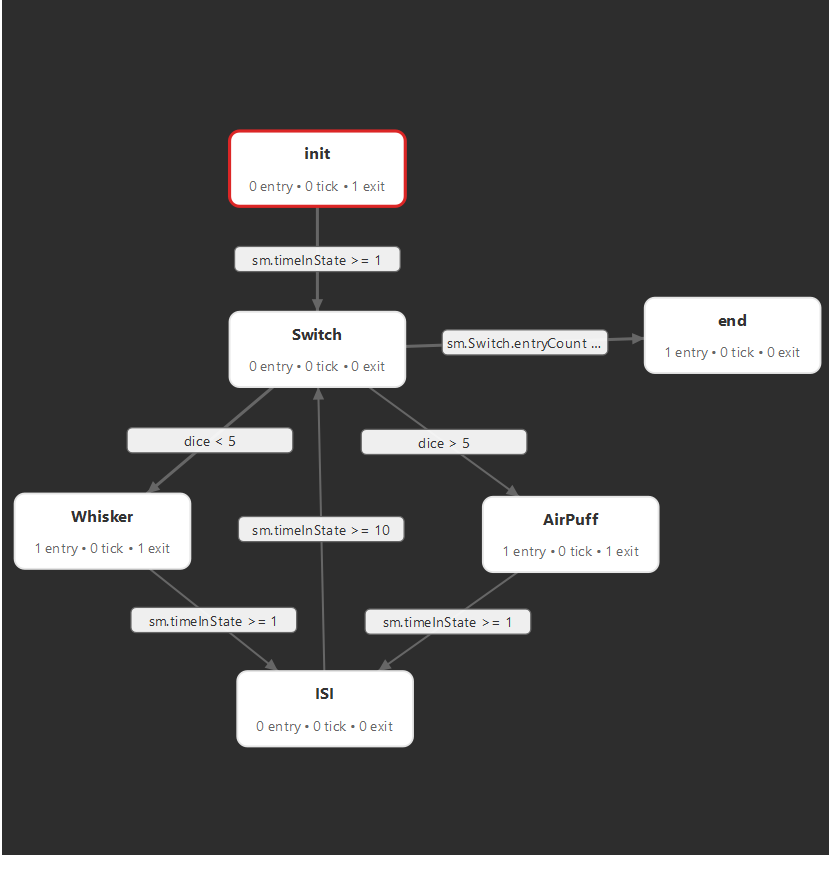
Maestro – Experiment Control
Connects and synchronizes every device in the rig (stimulators, treadmills, cameras, reward systems) under one application. Define experiment logic as a state machine with variables, timers and rules, then let session management capture device data, variables and event logs into analysis-ready files on every run.
Learn more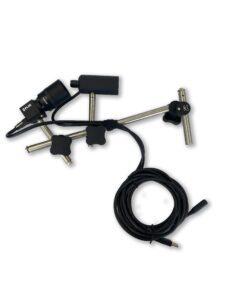
Behavioral Camera with Infrared Illumination
High-speed monitoring of mice and rats under infrared illumination, close enough to resolve pupils, whiskers and paws, or wide enough to track the whole animal moving through an environment such as a home cage or the magnetic maze, all without visible light in the arena.
Learn more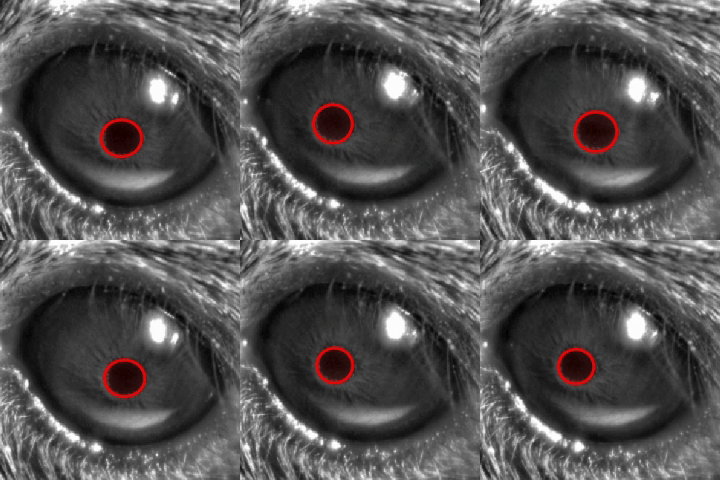
Video Tracking with DeepLabCut
Precise, reproducible markerless tracking as a service, on our behavioral cameras or third-party recordings. You receive fully trained, reusable DeepLabCut models, .csv coordinate data or labeled videos, tracking eye, paw, tail or body points.
Learn more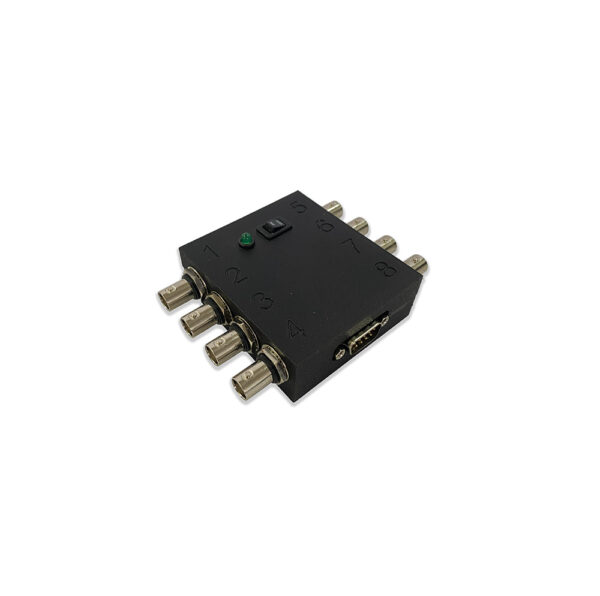
USB to 8 Digital Channels
Eight independent digital I/O channels over USB for triggering and timing, on TTL-compatible BNC connectors plus a parallel DB9. It toggles pins, reads inputs, waits for triggers or generates square waves, and ties our devices to the OiS200 or any instrument that accepts TTL.
Learn more
Automated Home Cage System
A voluntary head-fix system that produces hundreds of hours of brain imaging data per month without user interaction, reducing handling bias in neuroscience imaging.
Learn more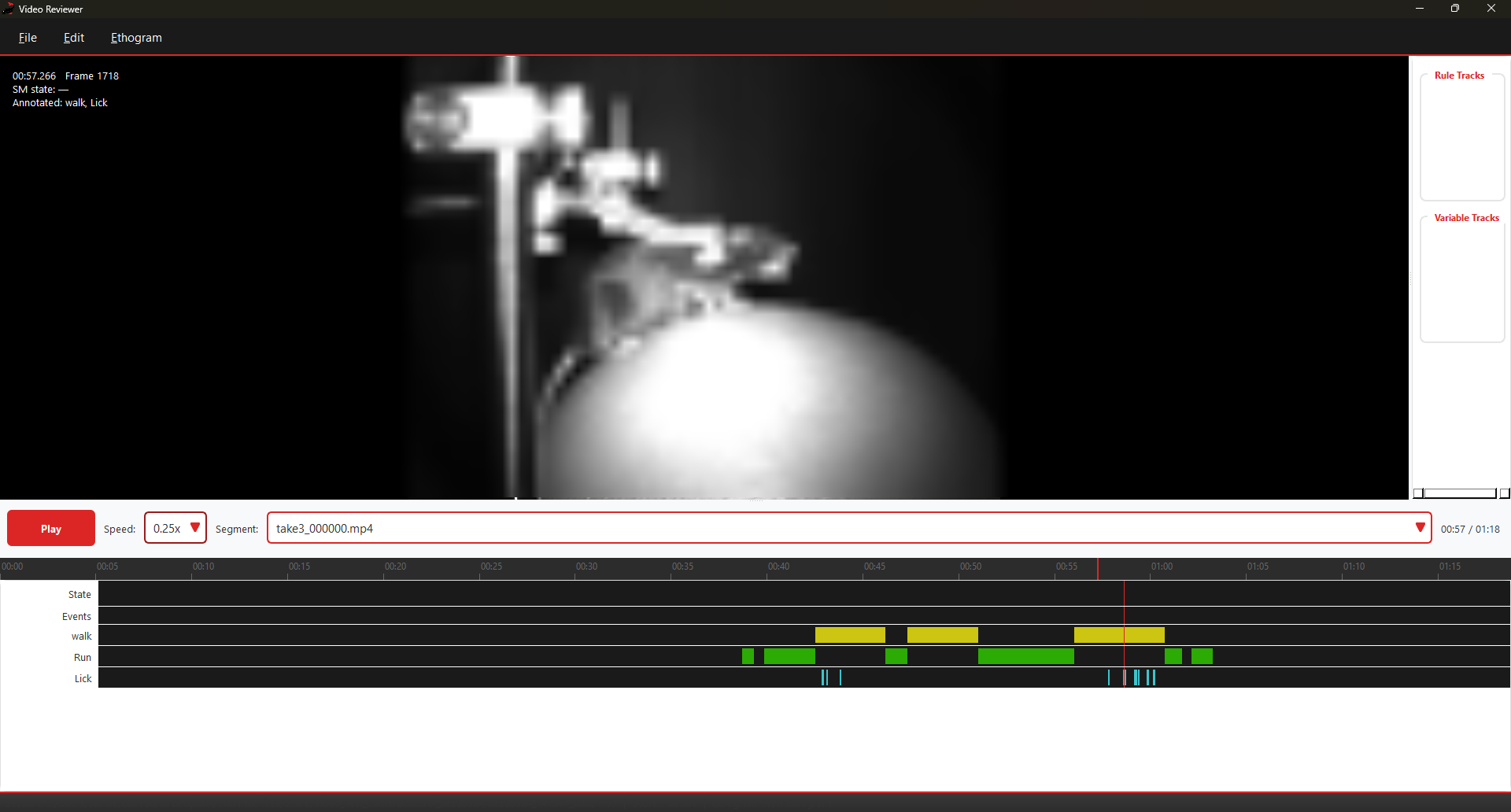
VideoReviewer – Review & Scoring
Replays a Maestro session's video on the same clock as its data: sensor variables, device events and state-machine transitions, so every behavior you mark is anchored to the exact moment it happened. It opens a session folder as Maestro and the Behavioral Camera left it, with nothing to convert, merge or rename first.
See how it worksOne Control Layer for the Whole Rig
Maestro is that one control layer: it coordinates every device in the rig from a single application, runs closed-loop logic in real time, and logs each session automatically. Prefer more direct control? Every device also ships with its own standalone software, documented serial and TTL commands, and a PsychoPy plugin.
- Maestro coordinates multiple devices as one synchronized setup, with automatic session logging
- Customized Maestro experiments included when you purchase multiple devices
- Free control software for each device, for standalone use and quick checks
- Documented serial commands and TTL lines for custom code and hardware triggers
- PsychoPy plugins, so protocols are built in the interface you already know
- Speed, distance, licks, choices and events export to .csv, ready for analysis
From Raw Video to Scored Behavior
The behavioral camera, VideoReviewer and the DeepLabCut service form a pipeline: record at high speed under infrared, score what happened against the data the rig logged at that exact moment, and track body points markerlessly where manual scoring won't scale.
- Infrared illumination captures pupils, whiskers and paws in close-up, or the whole animal moving through a cage or maze, without disturbing it
- VideoReviewer opens a session folder as Maestro and the camera left it, with no export or conversion step
- Behaviors are scored on the same clock as sensor variables, device events and state transitions
- Trained, reusable DeepLabCut models are delivered with your data, not locked to us
- Outputs as .csv coordinates or labeled video, whichever fits your pipeline
Start from Your Research Question
The same catalog, organized by what you are trying to measure.
Whisker & Tactile Processing
Reproducible deflection or air-puff stimulation of the whisker pad, delivered to a head-fixed animal under imaging.
Retinal Function & Visual Response
Full-field and flash stimulation for ERG, or patterned visual tasks for head-fixed behavior.
Tonotopy & Ultrasonic Vocalization
Calibrated stimuli from the audible range into ultrasound, with hardware triggers for closed-loop playback.
- High-Frequency Acoustic Stimulator
- Behavioral Camera (paired recording)
Decision-Making & Reward Learning
Two-alternative and go/no-go paradigms with measured responses and matched positive or aversive reinforcement.
Spatial Memory & Exploration
Physical mazes for freely moving animals, or virtual environments for head-fixed imaging in a fraction of the space.
Locomotion & Motor Coordination
Voluntary or forced running, fine forelimb control, and standard coordination assays.
Working on something not listed here? Describe your paradigm: most of our rigs started as a custom request.
Fits the Rest of Your Setup
Behavioral and stimulation devices are designed to sit alongside the acquisition and control tools already in your lab.
Building a custom rig? Contact us about integrating additional devices.
Frequently Asked Questions
Can I combine devices from different sections into one rig?
That is how they are designed. The behavioral lever, for example, works with the air puff stimulator and water dispenser for reward or punishment, and mounts alongside our treadmill, head fixation system and automated home cage. Devices share mounting standards and speak the same control interfaces.
How do I program an experiment?
Three ways, depending on how much control you want. Each device comes with free standalone software; a PsychoPy plugin lets you build protocols in PsychoPy's interface; and a documented serial command list plus TTL lines let you drive everything from your own code, with Python sample scripts included to get started. For multi-device experiments, Maestro coordinates them under a single application.
Can I synchronize behavior with imaging or electrophysiology?
Yes. Devices provide TTL trigger inputs and outputs so stimuli, responses and rewards are aligned with your acquisition: our OiS200 widefield, speckle and intrinsic imaging systems, 2-photon microscopes, or third-party electrophysiology.
Do these systems work with rats as well as mice?
Several do. The air puff stimulator, water dispenser, behavioral camera and rodent treadmill are all suitable for rats as well as mice. Head-fixation hardware, the spherical treadmill and the rotarod are designed around mice; ask us before specifying them for a rat protocol.
What data comes out of a session?
Device software logs its measurements (treadmill speed and distance, lick counts, lever position, wheel choices) to .csv, and Maestro's session management collects device data, state-machine variables and event logs into structured files automatically. Behavioral video is recorded alongside it: open the session in VideoReviewer to score behaviors against that data frame by frame, or send the recordings through our DeepLabCut service for tracked coordinates or labeled video.
Can you build a configuration that isn't in the catalog?
Yes. The magnetic maze accepts custom layouts, the rotarod accommodates a range of wheel designs, and most of our instruments began as a specific lab's request. Tell us what you need and we'll quote it.
Is training or documentation provided?
Each device ships with its software, a manual and a serial command reference. Protocols and application notes are published on our protocols page, remote onboarding sessions are available on request, and purchasing multiple devices gets you a customized Maestro experiment to start from.
Let's Configure Your Behavioral Setup
Tell us the paradigm, the species and the imaging you plan to run alongside it, and we'll come back with a rig that fits, from a single stimulator to a fully automated home cage.